IPL Session Betting Guide: How Fancy Lines Move and Settle
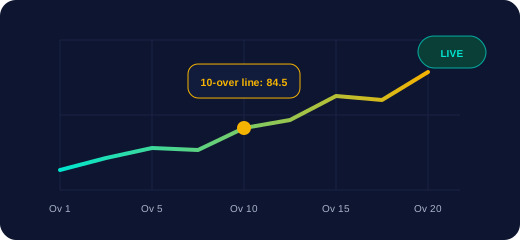
During the IPL, the busiest markets on our cricket book aren’t the match winner. They’re the session lines: runs in the powerplay, runs at 10 overs, a batter’s score, the partnership. They settle quickly and they move every ball. That’s exactly why they reward people who understand what moves them, and punish people who bet on a feeling.
The common IPL session markets
- 6-over runs (powerplay). Runs in overs 1–6, with only two fielders allowed outside the circle.
- 10-over and 15-over runs. Runs at those marks, often opened after the powerplay.
- 20-over (innings) runs. Total for the innings, available before and during it.
- Batter runs. Whether a named batter reaches a number.
- Fall of wicket / partnership. The score when the next wicket falls, or runs added by the current pair.
- Single over runs. Runs in a specific over, usually the next one.
Reading a line: Yes, No and the gap
A powerplay line might show No 52 / Yes 53, each with a rate underneath (100 means even money). Yes wins at 53 or more. No wins at 51 or fewer. If the team makes exactly 52 after six overs, both sides lose. That one-run gap is built into every line, and on a single-over market a one-run gap is a big slice of the possible outcomes. If decimal odds or rates are new, read how odds work on 11xplay first.
What moves an IPL line
The pitch
Flat, true surfaces push every runs line up; slower pitches that grip pull them down. The first few overs tell you more than any pre-match talk. If the new ball is swinging and the openers are playing and missing, the 6-over line will usually drift lower before the third over.
Dew in the second innings
At evening games, dew makes the ball wet and hard for spinners and seamers to grip. Batting often gets easier as the night goes on. Lines for the chasing side tend to reflect that, but how heavy the dew is varies by venue and time of year, so watch the bowlers wiping the ball and the field placements rather than assuming.
Ground size
Short boundaries turn mistimed shots into sixes, and runs lines are set higher at smaller grounds than at large ones. A team’s average at one venue tells you little about the next.
Who is batting and who has overs left
A line set while a set batter is on 40 behaves very differently from the same line two balls after that batter is out. Count how many overs the strike bowlers still have. If the best death bowler has two overs left, the 20-over line may still be too high even after a big 15th over.
Weather
Rain threats change everything, including how the market settles. Always know the reduced-overs rule before you bet on a cloudy evening.
How sessions settle
Session bets settle from the official scorecard once that over or event is complete, usually within minutes. A few rules worth knowing:
- Wides, no-balls and other extras count as runs in the over unless the market says otherwise.
- If a match is shortened by rain before a session completes, that session is handled under the rules for that match: check the Rules tab on the match screen before you bet.
- Your bet is accepted at the line on screen when it is placed. Markets are often suspended for a few seconds after a wicket or a boundary while the line resets. A tap during that moment may be rejected.
Habits that help
- Watch the first two overs before betting a powerplay line. The opening line is set before anyone has seen how the pitch plays.
- Bet fewer sessions, not more. Lines are available every few balls. You don’t need to be in all of them.
- Size stakes for a fast market. Sessions settle quickly, so losses arrive quickly too. Keep each bet to 1–2% of your bankroll, as in our betting tips guide.
- Avoid chasing the next over. If an over line just beat you, the next one isn’t a chance to “get it back”.
- Note why you bet. “Dew expected, spinners struggling” is a reason. “They have to score” isn’t.
All the session markets on offer, plus Match Odds and the Bookmaker market, are listed on the 11xplay cricket betting page. Betting is for adults aged 18 and over. Laws differ between Indian states, so check what applies where you live.
IPL Session FAQs
What is a session or fancy bet in IPL?
It is a Yes/No bet on a number during the match, such as runs in the first 6 overs, runs at the 10-over mark or a batter’s score. You are not betting on who wins, only on whether that number reaches the line.
What happens if the score lands exactly between Yes and No?
With a line of No 52 / Yes 53, exactly 52 runs means both Yes and No lose. Check the gap before every session bet.
How are IPL session bets settled?
From the official scorecard once that over or event is complete. Extras count as runs in the over unless the market rules say otherwise, and each match’s Rules tab sets out what happens if overs are reduced.
Why did the line suddenly jump?
Lines move after wickets, big overs, rain news or a change of bowler. Markets are often suspended for a few seconds after a wicket or boundary while the line is reset, and your bet is only accepted at the line shown when it is placed.