Online Cricket ID: How It Works and How to Choose Safely
“Online cricket ID” is offered by hundreds of WhatsApp numbers, and not all of them pay out. This guide explains what an ID actually is, how the model works, and the checks to run on any provider before you send money. That includes us.

What an Online Cricket ID Is
An online cricket ID is a personal betting account that a provider opens for you. It comes with a username, a password, a wallet in rupees, and access to cricket markets on the provider’s platform. In India the usual route is not a sign-up form. You message a provider on WhatsApp, a person opens the account, and your login details arrive in that chat.
The ID model grew out of the old phone-and-notebook bookie system, and it fixed that system’s worst problems. Bets are recorded the moment they are placed. Results settle from the official scorecard instead of someone’s memory. Your balance is visible whenever you log in. What it kept is a person you can talk to, and that is also where the risk sits: the quality of the person and the platform behind the number varies enormously.
Before going further, two ground rules. You must be 18 or older. And gambling laws in India are made state by state and have changed in recent years, so check what applies where you live before you open any ID.
Nine Terms Every Cricket-ID Provider Uses
The words you will meet on any provider’s page, including ours. What they mean and which ones should make you careful.
- ID provider
- A desk that opens accounts on an exchange or book, usually on WhatsApp, and handles deposits and withdrawals. 11xplay runs its own; many providers resell someone else’s.
- Master ID
- A reseller’s account from which smaller IDs are issued. If your provider has one, your money sits under their name, not yours. Ask.
- Exchange
- A platform where players back and lay against each other. Prices move with demand. 11xplay is one.
- Book
- A fixed-odds operator. Rates set by the house, no lay. Simpler, less transparent.
- Payment name
- The name withdrawals are paid to. The single best test of a provider: if they will pay to any name, they will also take from any name.
- Statement
- A full record of stakes, settlements and payments. Providers without one settle disputes by argument.
- Minimum deposit
- The smallest first payment accepted. Ours is ₹300. A high minimum is a sales tactic; a zero minimum usually hides fees.
- Withdrawal time
- How long a payout takes. Minutes on UPI is normal for a provider holding its own float. Days means your money is somewhere else.
- Demo
- A look-around lobby with no wallet. Providers that have one let you see the panel before paying. Ours is at the top of this page.
The ID Model, Step by Step
- You message a provider. Usually on WhatsApp, from a number listed on their website.
- They open the account. You get a username, a starting password and the link to sign in on.
- You deposit. By UPI or bank transfer, to payment details the provider gives you, then send the reference (UTR) so it can be credited.
- You bet. On the provider’s platform: match odds, sessions and so on.
- You withdraw. You request a payout to your own account and the provider sends it.
Every step after the first depends on the same provider behaving honestly. That is why the checklist below matters more than odds, bonuses or how polished a website looks.
How to Test Any Cricket-ID Provider in Seven Days
Including us. The sequence costs under ₹1,000 and tells you everything the sales pitch does not.
- Ask three questions before paying. What name do withdrawals go to? Is there an account statement? Is there a demo? A provider that dodges any of them has answered.
- Deposit the minimum, no more. Note the time, the credit time and whether the screenshot was asked for. Minutes is normal.
- Place a small bet that settles fast. Toss or a bookmaker bet. Watch it appear under Open Bets, then Settled, with a scorecard figure.
- Withdraw a small amount. The real test. Minutes to the payment name is a provider holding its own float. Excuses, fees or “after turnover” on your own deposit is the exit sign.
- Ask for a limit. Any provider worth using sets a deposit cap on request, immediately, without a pitch. If they argue, leave.
- Read the statement. Every bet and payment, timestamped. If it does not exist, you have been trusting a chat summary.
- Decide. Pass on all six and the provider is sound. Any fail on day 3 or 4, withdraw what you can and move on.
Run this on 11xplay too. We would rather lose a ₹300 player on day 3 than be trusted for the wrong reasons.
A Practical Checklist for Any Provider
Run these checks before you deposit anything more than the minimum. They take about ten minutes and cost very little.
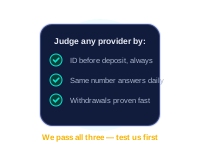
1. ID first, money second
A real provider sends your login before asking for any deposit. If you are asked to pay first, or to pay an “ID fee”, stop there.
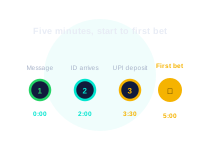
2. A small test withdrawal
Deposit the minimum, place one small bet, then ask for a withdrawal the same day. It should reach an account in your own name.
3. The same contact tomorrow
Message again the next day and the day after. A provider that goes quiet once money is in will go quiet when you want it out.
Walk Away If You See Any of These
- A fee to open, activate or “upgrade” an ID.
- Requests for your UPI PIN, an OTP, net-banking password or screen-sharing. No deposit needs them.
- Payment to a QR code forwarded by someone in a group, rather than details given in your own chat.
- “Free working IDs and passwords” posted on Telegram or social media.
- Promises of fixed matches, guaranteed wins or “sure-shot” tips.
- Withdrawals that need an extra deposit, a “tax” or a “release charge” first.
We go through more of these with examples in Is 11xplay real or fake?
How the 11xplay ID Fits That Checklist
We run the 11xplay exchange, so here is how our own ID process lines up with the checks above. Hold us to it.
- Your username, password and login link arrive in the chat before we ask for any deposit
- Opening an ID is free; the minimum deposit is ₹300
- Withdrawals are processed 24x7, most UPI payouts in 5–15 minutes, bank transfers 15–30 minutes
- The desk never asks for your UPI PIN, an OTP, screen-sharing or a fee
- One ID covers cricket, football, tennis, horse and greyhound racing and the casino, on one wallet
What the ID is made of is explained on the 11xplay ID page, and the sign-up steps are on Register.
Get an 11xplay Cricket ID| Cricket market | What you bet on |
|---|---|
| Match Odds | Who wins, back or lay |
| Bookmaker | Who wins, at fixed rates |
| Fancy (session) | Yes/No on runs, wickets or a batter’s score |
| Toss | Which captain wins the toss |
| Tied Match | Whether the match ends level |
Own-Float Exchange, Reseller and Book, Compared
Three kinds of provider sit behind most cricket-ID pages. Which kind you are dealing with decides most of the risk.
| Own-float exchange (11xplay) | Reseller / master ID | Fixed-odds book | |
|---|---|---|---|
| Where your balance sits | On your own ID | Under the reseller’s master | With the book |
| Withdrawal time | Minutes on UPI | Depends on the reseller’s cash | Varies |
| Statement | Full, on the panel | Sometimes | Rarely |
| Lay bets | Yes | If the platform allows | No |
| Who sets limits | You | The reseller | The book |
| Disputes | Settled from the statement | Argued with the reseller | Argued with the book |
| Failure mode | Rare; name rule protects payouts | Reseller disappears with the float | Book refuses a big win |
Resellers are not all dishonest. The structure is the problem: your money is one person’s decision away from gone.
A Sensible First Week With Any Cricket ID
Treat the first week as a test of the provider, not a chance to win big. Deposit the minimum. Put a small stake, say ₹100, on a session line and watch how it settles after the overs are bowled. Read the market rules for rain-shortened games before you need them. Then withdraw part of your balance the same evening and check how long it takes to land.
If all of that goes smoothly, you have learned how the screens work and confirmed the provider pays. If any of it goes badly, you have lost very little. Our session markets guide explains the lines you will see on match day.
Provider Questions the Desk Answered This Week
Questions from players comparing providers. Week of 20 to 26 October 2026. Updated at each review.
- Mon“Are you a reseller?” No. IDs are issued on our own panel and the float is ours. The question is the right one to ask anyone, and it is in the checklist below.
- WedA player tested us with a ₹300 deposit and ₹200 withdrawal. Deposit credited in four minutes, withdrawal landed in nine. They opened a full ID the next day. That is the week-long test above, compressed.
- ThuSomeone else’s master ID had stopped paying. Nothing we can recover; different operator. We opened a fresh ID here and explained the reseller structure, now in the table above.
- Sat“Why is your minimum higher than X?” Because a zero-minimum provider is usually charging elsewhere. ₹300 is the smallest deposit the UPI name check is worth running on.
Most providers fail at day 3 of the test above. The ones that pass look boring in a chat, which is the point.
The Seven-Question Checklist
Ask these in the first message. A sound provider answers all seven in a minute. Ours are answered on this page.
- Is this your own panel, or a master ID under someone else?
- What name are withdrawals paid to, and will you pay to any other?
- Is there a full account statement I can open myself?
- How long does a ₹500 withdrawal take at 10 pm on a match night?
- Will you set a deposit limit today if I ask, without a pitch?
- Is there a demo lobby I can see before paying?
- Who do I message when something goes wrong, and is it the same chat?
What changed on this page
- Added the glossary, timeline, comparison table, desk log and checklist sections. Review date updated.
- Full rewrite in the desk’s own voice, panel header and login bar added, every claim checked against how the desk works.
- Related-guides block added, old backup files removed from the server, sitemap rebuilt.
Spotted something out of date? Say so in the chat and it is corrected at the next review.
Online Cricket ID FAQs
What is an online cricket ID?
It is a personal betting account, opened for you by a provider, that gives you a username, a password, a wallet and access to cricket markets such as match odds and session lines. In India most IDs are opened over WhatsApp rather than through a sign-up form.
How does the ID model work?
You message a provider, they open the account and send your login details, you deposit to payment details they give you, and you bet on their platform. The same contact handles withdrawals and problems, which is why choosing the provider carefully matters more than anything else.
How can I tell whether a cricket ID provider is safe to use?
Run a small test. The ID should arrive before any money is asked for, the same contact should answer you on later days, and a small withdrawal should land in your own account on the same day. Walk away from anyone who asks for an ID fee, an OTP, your UPI PIN or screen-sharing.
Is an online cricket ID free?
It should be. A real provider does not charge for opening an ID. Money only goes in when you deposit to play. On 11xplay the minimum deposit is ₹300.
Which cricket markets does an ID usually cover?
On an exchange-style platform like 11xplay you get match odds (back and lay), a bookmaker market, fancy session lines such as runs in the first six overs, and toss and tied-match markets on most fixtures.
Is online cricket betting legal in India?
Gambling laws are set state by state and have changed in recent years, so the answer depends on where you live. Check the rules that apply to you before opening any ID. You must also be 18 or older.
Can one cricket ID be used for casino games too?
That depends on the provider. An 11xplay ID uses one wallet for cricket, other sports and the casino tables, so you never move money between accounts.